> For the complete documentation index, see [llms.txt](https://help.boomerang3.com/llms.txt). Markdown versions of documentation pages are available by appending `.md` to page URLs; this page is available as [Markdown](https://help.boomerang3.com/boomerang-3-instrukcja-obslugi-uzytkownika/dashboard/reports/raport-obiektu.md).
# Raport obiektu
Jak generować raport obiektu.
Raport obiektu generujesz z poziomu widoku obiektu.
{% hint style="info" %}
Najpierw ustaw zakres czasu raportu. Zobacz: [Wybór zakresu czasu](/boomerang-3-instrukcja-obslugi-uzytkownika/common_elements/wybor-zakresu-czasu.md).
{% endhint %}
### Wygeneruj raport
{% stepper %}
{% step %}
### Otwórz obiekt
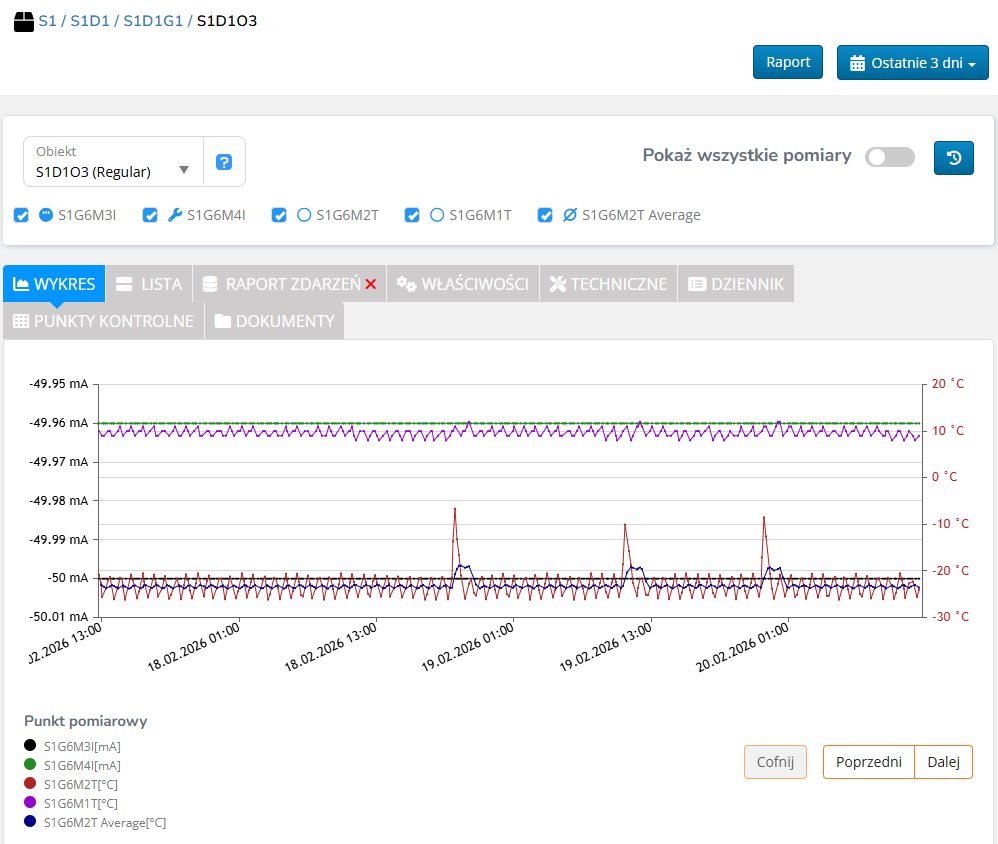
W strukturze pulpitu przejdź do obiektu, dla którego chcesz raport.
Kliknij obiekt, aby otworzyć jego widok.
{% endstep %}
{% step %}
### Wybierz punkty pomiarowe do raportu
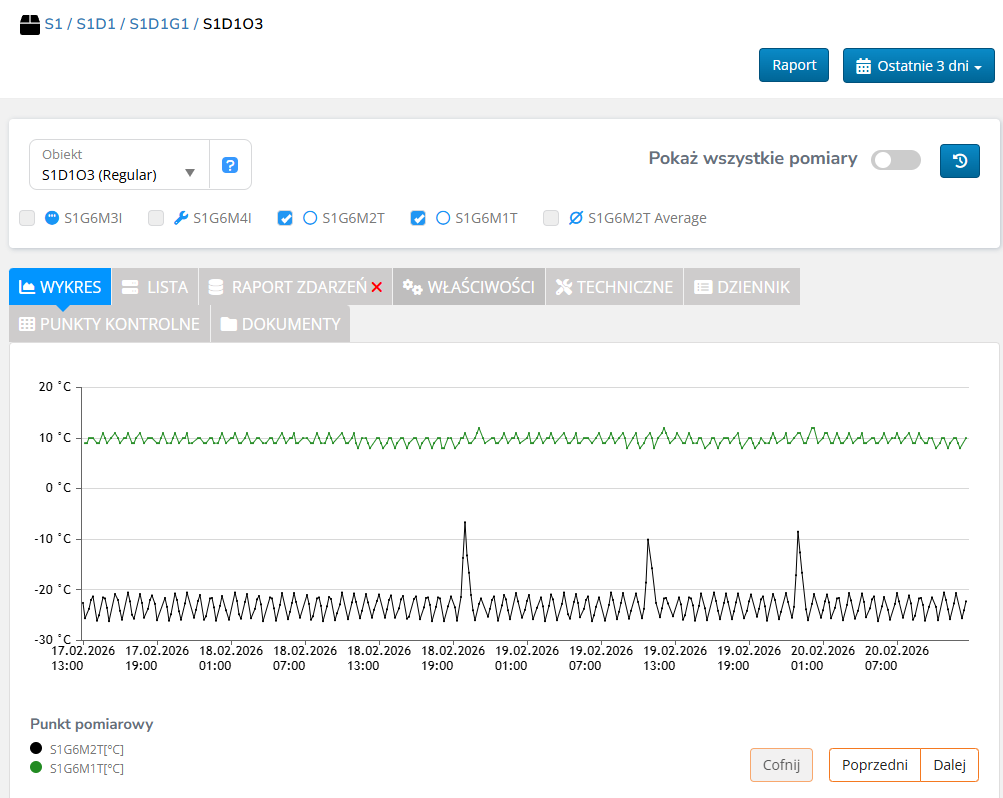
Odznacz punkty pomiarowe (MP), których nie chcesz uwzględniać.
{% endstep %}
{% step %}
### Uruchom generowanie raportu
Kliknij **„Raport”**.
{% endstep %}
{% step %}
### Wybierz zawartość raportu
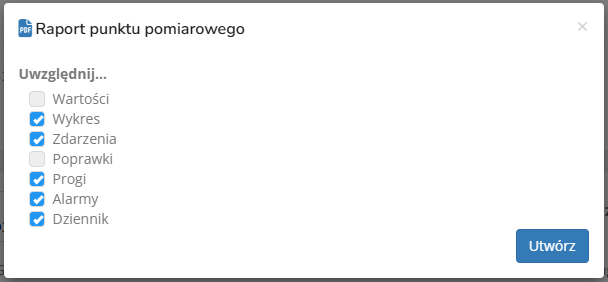
W oknie wybierz dane, które mają znaleźć się w raporcie.
Kliknij **„Utwórz”**.
{% endstep %}
{% step %}
### Otwórz pobrany plik PDF
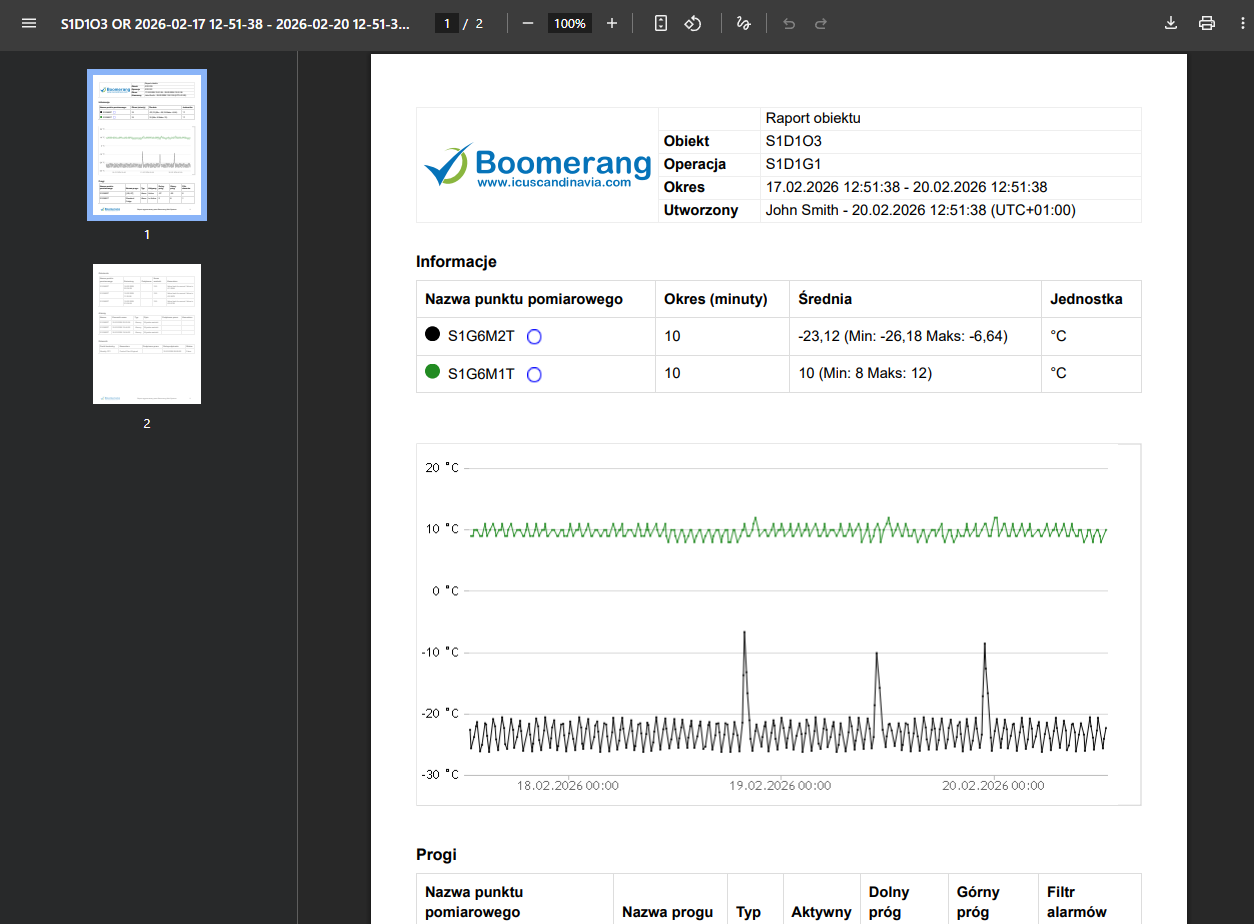
Przeglądarka pobierze plik raportu.
Otwórz go z listy pobrań lub z folderu **Pobrane**.
{% endstep %}
{% endstepper %}
{% hint style="info" %}
Jeśli raport nie zawiera spodziewanych danych, sprawdź: zakres czasu oraz zaznaczone punkty pomiarowe.
{% endhint %}
---
# Agent Instructions
This documentation is published with GitBook. GitBook is the documentation platform designed so that both humans and AI agents can read, navigate, and reason over technical content effectively. Learn more at gitbook.com.
## Querying This Documentation
If you need additional information that is not directly available in this page, you can query the documentation dynamically by asking a question.
Perform an HTTP GET request on the current page URL with the `ask` query parameter, and the optional `goal` query parameter:
```
GET https://help.boomerang3.com/boomerang-3-instrukcja-obslugi-uzytkownika/dashboard/reports/raport-obiektu.md?ask=&goal=
```
`ask` is the immediate question: it should be specific, self-contained, and written in natural language.
`goal` is optional and describes the broader end goal you are ultimately trying to accomplish on behalf of the user. GitBook uses it to tailor the answer towards what is most useful for that goal.
The response will contain a direct answer to the question and relevant excerpts and sources from the documentation.
Use this mechanism when the answer is not explicitly present in the current page, you need clarification or additional context, or you want to retrieve related documentation sections.